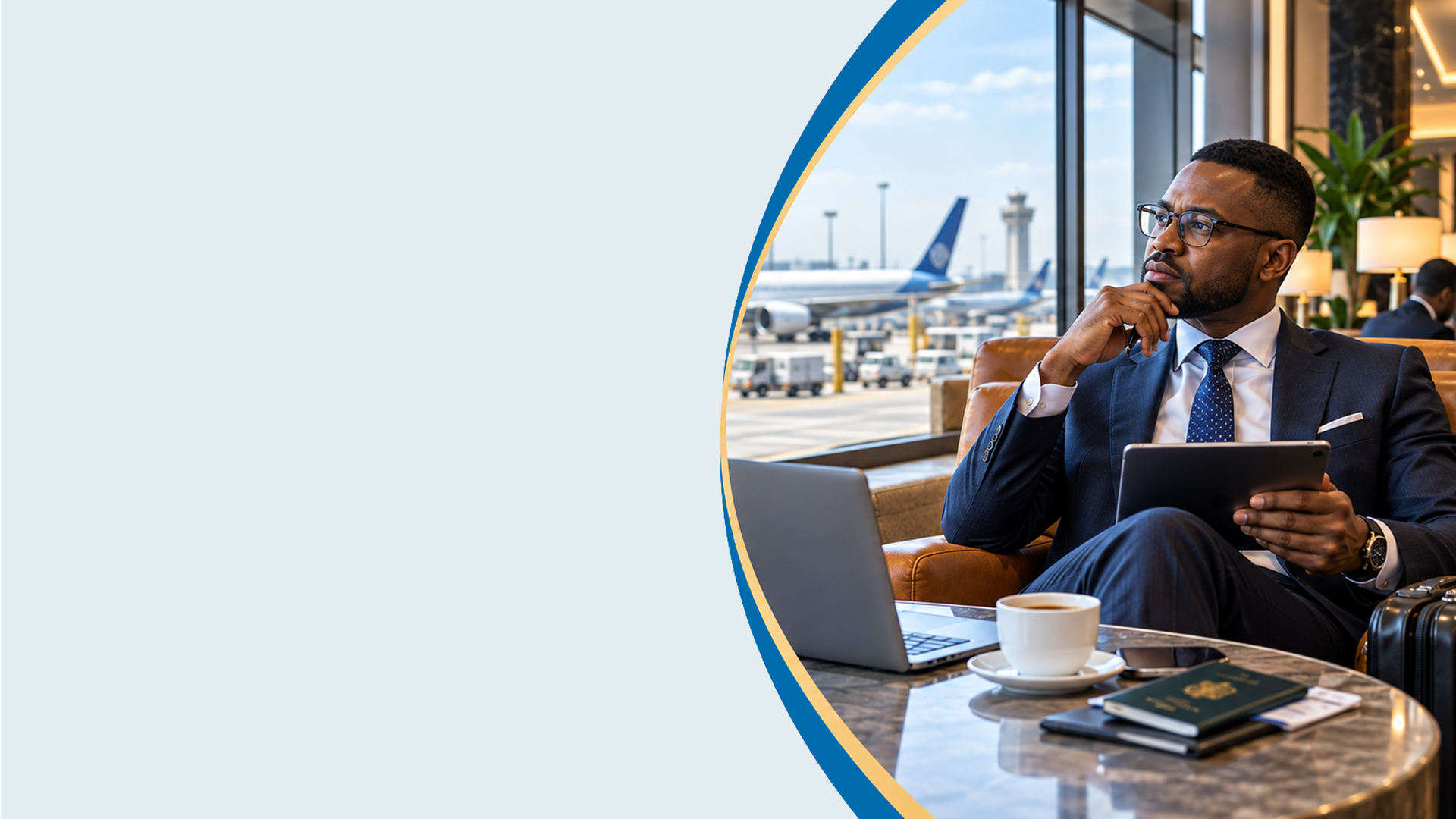
Business travel costs are rising far faster than travel itself. This is shaping the way companies used to plan and prioritize their travel needs.
WTM London runs at ExCeL from 3 to 5 November, and one number will probably come up in a lot of its conversations. GBTA forecasts global business travel spending at a record US$1.71 trillion in 2026, up 7.2% on 2025. Last year’s actual spend was US$1.59 trillion, ahead of what GBTA had predicted.
Spending is certainly strong by all means, but it’s only half the picture. The other half is how many trips that money buys, and in 2026 the answer was: not many more.
How big is the gap between spending and trips?
GBTA forecasted about 1.84 billion business trips in 2026, up 1.3% from last year. But spending grew more than five times faster than trips. At that pace, GBTA now expects the industry to pass US$2 trillion by 2030, a year later than it had previously forecast.
This gap can be attributed to rising transportation and travel costs, which are lifting prices faster than trip volume. It points to the conflict involving Iran and the wider Middle East early in 2026, which disrupted aviation, trade and energy markets, lengthened journeys and pushed up airfares.
The GBTA price forecast from July 2026 clearly shows where the pressure sits. Global average airfare is expected to reach USD 756 in 2026, up 4.7%, with economy fares up 8.7%. Global average hotel rates are forecasted at USD 168, up 3.7%, while EMEA hotel rate growth is forecast at only 0.6%. While these are global and regional averages, the overall direction for companies in Africa is hard to miss. A business that took the same number of trips in 2026 as in 2025 will almost certainly have paid more for them.
A business that took the same number of trips in 2026 as in 2025 will almost certainly have paid more for them.
Are companies cutting travel, or just choosing trips more carefully?
GBTA’s CEO, Suzanne Neufang, puts it in measured terms: “companies haven’t stepped away from travel, but they are becoming increasingly more selective and productivity-focused.” The survey behind the forecast, which covered more than 4,700 travellers, backs that up. Of those surveyed, 74% say they travel as much as or more than in previous years, and 65% say their company requires or encourages booking through a travel management company or corporate online tool, which suggests more companies are trying to see trips before they happen.
In short, people are still travelling about as much as before. What’s changed is how hard each trip has to work: before it’s approved, someone now asks what it’s for and what it should achieve. This is a finance question as much as a travel one, because each trip now costs more and has to justify the price.
What does a selective trip mean for the hotel?
If a trip exists to deliver a result, the stay should protect that result. That means a hotel the traveller can rely on to be ready on arrival, in a location that keeps the day’s meetings easy to reach, and with a named person to call when something shifts. Because in reality, plans do shift: a flight runs late, a meeting moves, a client asks for another night.
A poor stay works against the trip. It costs the traveller time and energy on the day they need both, and it creates follow-up work for assistants, operations and finance afterwards. When the airfare and room rate have both gone up, the business is paying more for each trip and has less room to absorb a bad one.
Business travel isn’t going away. The trips that matter still have to happen. What’s rising is the price of making them, so the parts of the cost a business can control, like accommodation terms, changes and admin time, now deserve more attention than they got when travel was cheaper.
If a trip exists to deliver a result, the stay should protect that result.
What should African businesses do about it?
Start by planning trips around outcomes. For each trip, write down the purpose and the result you expect, and approve on that basis.
Next, find out what hotel spend looks like today. Total accommodation spend by city, the rates paid and the share of bookings made outside the preferred channel give you a baseline. Without one, a rising price is hard to tell apart from a poorly managed one.
Then look at the time each trip costs your team. Searching, rebooking, chasing confirmations and reconciling invoices all add to the real price of a trip, and none of it shows up in the fare or the room rate.
None of this needs new technology. It needs a decision to treat travel as a managed category with an owner and a baseline, instead of a string of separate bookings.
Club Concierge for Business works with African businesses on the accommodation side of this question: one network, one contact and one invoice.
Talk to us about your accommodation spend.